How to Travel from Kunming to Pu'er and Xishuangbanna: A 2026 Tea Culture and Nature Route Guide
How to Travel from Kunming to Pu'er and Xishuangbanna: A 2026 Tea Culture and Nature Route Guide
Yunnan Province welcomed 704 million tourist visits in 2024, generating ¥1.14 trillion in tourism revenue (Yunnan Provincial Government, 2025). The Kunming-Pu'er-Xishuangbanna corridor is one of the province's fastest-growing routes, driven by the 2022 opening of the China-Laos Railway and the 2023 UNESCO inscription of Jingmai Mountain as the world's first tea-themed World Heritage site. This guide gives you a complete, detailed plan for a 5 to 6 day journey through tea plantations, ancient forests, and tropical rainforest — timed for early October when the rains ease and the autumn tea harvest begins.
Whether you arrive in Kunming for a single evening or spend a full day exploring the Spring City, this route takes you south through three distinct climate zones — from Kunming's mild highland to Pu'er's subtropical tea country to Xishuangbanna's tropical monsoon lowlands. You will walk through thousand-year-old tea forests, taste bamboo rice cooked over an open fire, and sleep in villages where the morning fog rolls over the canopy. Every section below includes specific transport details, hotel recommendations, restaurant suggestions, and the practical information you need to book and go.
Key Takeaways
- The China-Laos Railway makes Kunming-to-Pu'er a 3-hour rail trip (¥146-200), turning this into a feasible long-weekend route from anywhere connected to Kunming (Wikipedia — China-Laos Railway).
- Jingmai Mountain is the world's first tea-themed UNESCO World Heritage site (2023) — its 1,000-year-old ancient tea forests anchor the entire journey (UNESCO World Heritage Centre).
- Early October offers the best weather-to-crowd ratio, with the autumn tea harvest (秋茶) underway and temperatures from 15-30°C across the three-city descent.
How do you get from Kunming to Pu'er and on to Xishuangbanna?
The China-Laos Railway (中老铁路) transformed this route when its domestic Yuxi-Mohan section opened in December 2022. Kunming to Pu'er now takes just 3 hours by high-speed rail — faster than driving and comparable to flying once you factor in airport transit time. The rail line runs through tunnels and over bridges across the Yunnan highlands, emerging into the subtropical valleys south of Yuxi.
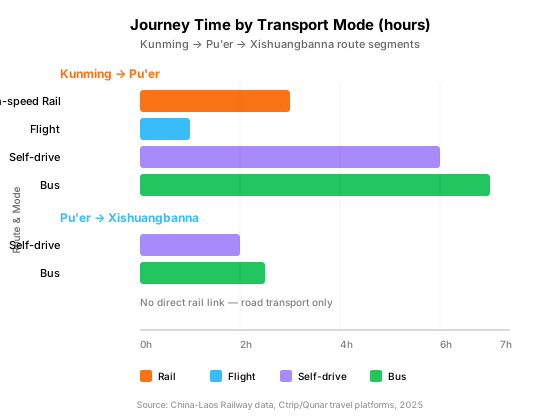
Kunming to Pu'er — four options compared:
| Mode | Duration | Cost (per person) | Booking | Best For |
|---|---|---|---|---|
| High-speed Rail | ~3 hours | ¥146-200 (2nd class) | 12306 app/website | Most travelers — fast, reliable, scenic |
| Flight | ~1 hour | ¥400-800 | Ctrip, Qunar, Fliggy | Time-pressed travelers |
| Self-drive | ~6 hours | ¥300-400 (fuel + tolls) | G8511 expressway | Flexibility, scenic stops |
| Long-distance Bus | ~7 hours | ¥150-200 | Kunming South Bus Station | Budget option — least comfortable |
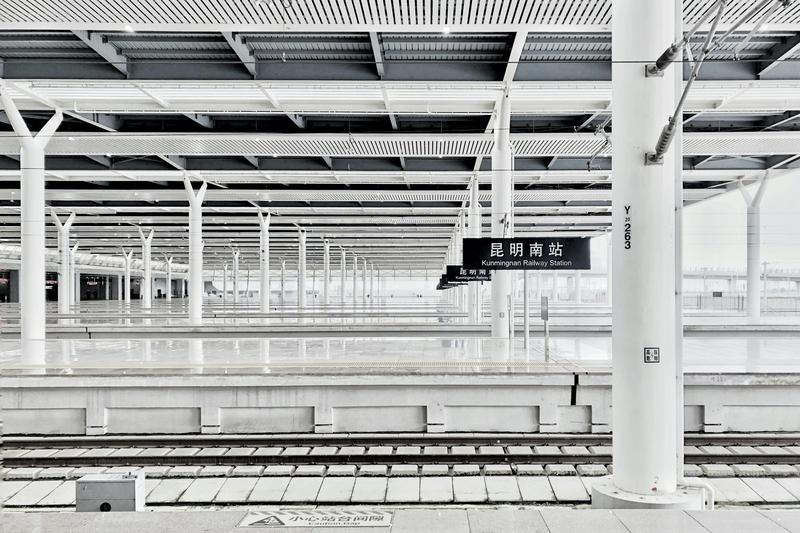
The high-speed rail is the clear recommendation. Trains depart Kunming South (昆明南) and Kunming Station (昆明站) multiple daily, arriving at Pu'er Station (普洱站). The ride is smooth, the seats are comfortable, and the scenery shifts from karst highlands to dense subtropical forest as you descend. Book on the 12306 app at least a few days ahead during the October holiday period.
Pu'er to Xishuangbanna — road only, no rail link:
There is no direct rail connection between Pu'er and Xishuangbanna as of 2025. The China-Laos Railway passes through both cities on the Kunming-Vientiane line, but regular passenger service between Pu'er and Jinghong is not available — you must travel by road.
| Mode | Duration | Cost (per person) | Booking | Best For |
|---|---|---|---|---|
| Express Bus | ~2.5-3 hours | ¥80-120 | Pu'er Bus Station, Ctrip | Budget travelers, no car |
| Self-drive | ~2 hours | ¥100-150 (fuel + tolls) | G8511 expressway | Flexibility, photo stops |
The express bus departs Pu'er Passenger Station regularly throughout the day. The drive via G8511 expressway takes you through rolling hills and tropical vegetation — the landscape visibly changes as you descend toward the Mekong River valley. If you self-drive, the road is well-maintained but winding; October rain can make surfaces slippery, so allow extra time.
Return journey — fly out of Xishuangbanna:
Xishuangbanna Gasa Airport (JHG, 嘎洒机场) offers direct flights to Kunming, Chengdu, Chongqing, Shanghai, Beijing, Guangzhou, Shenzhen, Xi'an, Lijiang, Dali, Hangzhou, and Wuhan (Ctrip flight schedules). A flight to Kunming takes about 1 hour and costs ¥300-600 depending on season. This creates a natural one-way loop: arrive Kunming, travel south overland, fly back from Xishuangbanna.
[CITATION CAPSULE] The China-Laos Railway's domestic section (Yuxi-Mohan) reduced Kunming-to-Pu'er travel from 6+ hours by road to approximately 3 hours by rail, with second-class fares at ¥146-200. The line runs from Kunming South through Yuxi, Pu'er, and on to the Laos border at Mohan — a total domestic journey of about 10 hours to the border crossing (Wikipedia — China-Laos Railway, 2025).
What is the recommended day-by-day itinerary for Kunming, Pu'er, and Xishuangbanna?
This 5 to 6 day plan balances tea culture immersion, nature exploration, and food discovery. It is designed for early October, when weather is transitional and crowds are moderate outside the National Day peak (October 1-7). Adjust the pace to your interests — you can compress it to 4 days by cutting one Xishuangbanna day, or extend to 7 by adding a full second day at Jingmai Mountain.
Day 1: Kunming — The Spring City send-off
Kunming's altitude of 1,891 m gives it mild temperatures year-round — expect 15-22°C in early October. Spend the morning at Green Lake Park (翠湖公园), where locals practice tai chi and play erhu by the water. In October, the first wave of black-headed gulls arrives from Siberia for the winter — feeding them is a Kunming ritual. Walk east to Yunnan University's historic campus, then grab lunch on Wenhua Lane (文化巷) for a bowl of authentic crossed-bridge rice noodles (过桥米线). The dish originated in Mengzi, south of Kunming, and the best shops serve it with a dozen small plates of raw ingredients you slide into scalding chicken broth.
Afternoon options: the Yunnan Provincial Museum (云南省博物馆, free, book ahead on WeChat) for context on the region's ethnic diversity, or Nanping Street (南屏街) and Jinbi Street (金碧路) for shopping. Pick up flower cakes (鲜花饼) from Jiahua (嘉华) or Pan Xiang Ji (潘祥记) as edible souvenirs — the rose-filled pastries are a Yunnan specialty that travels well.
If you take an evening train to Pu'er (last departures around 19:00-20:00), you arrive by 22-23:00 and save a morning. Otherwise, stay overnight in Kunming and catch an early train. For dinner, try steam pot chicken (汽锅鸡) at a local restaurant near Green Lake — the dish is cooked in a special clay pot that concentrates the broth into something clean and deeply savory.
Where to stay in Kunming: The Green Lake area (翠湖周边) is the most walkable base. Budget: Green Lake Youth Hostel or similar (¥80-150/night). Mid-range: Green Lake Hotel (昆明翠湖宾馆, ¥400-600) for heritage charm, or chain hotels like Atour/Hanting (¥250-400) for reliability.
Day 2: Pu'er — Into the ancient tea forests
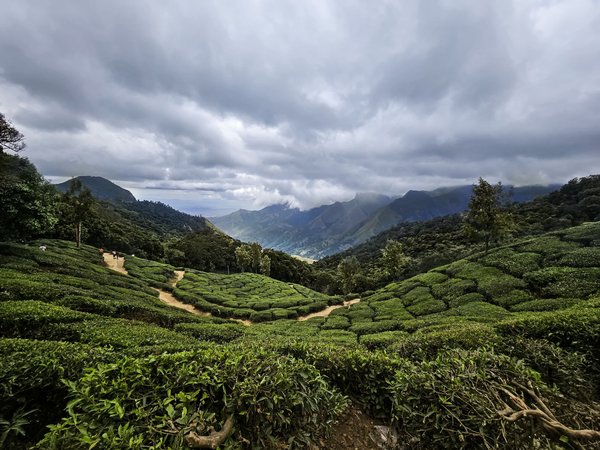
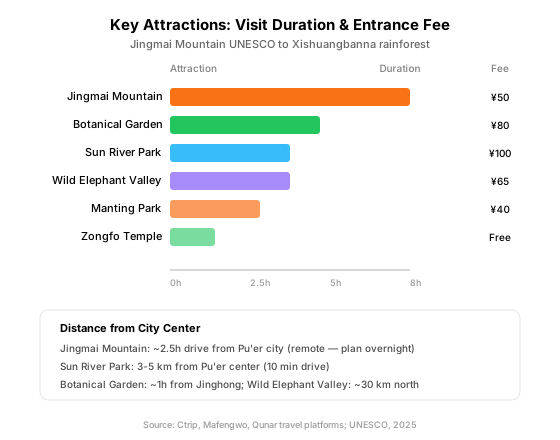
Rise early and head to Jingmai Mountain (景迈山), a 2.5-hour drive south of Pu'er city through Huimin Town. This is the soul of the entire trip. Inscribed as a UNESCO World Heritage site in September 2023, Jingmai Mountain is the world's first tea-themed World Heritage site — a cultural landscape where the Blang (布朗族) and Dai (傣族) peoples have cultivated tea for over 1,000 years (UNESCO World Heritage Centre). The ancient tea forests grow under a canopy of wild trees, a traditional agroforestry system that produces some of the most sought-after Pu'er raw tea (生茶) in the world.
The entrance fee is ¥50 per person. Spend the morning walking the ancient tea forest trails in Wengji Village (翁基布朗族古寨) — a preserved Blang village with wooden stilt houses and a 500-year-old Buddhist temple. The trail connects tea groves where trees are draped in moss and epiphytes, some over 1,000 years old. Have lunch at a village home kitchen: expect bamboo rice (竹筒饭 — glutinous rice stuffed into fresh bamboo and roasted over fire), stir-fried wild greens, and locally picked tea served plain.
In the afternoon, drive to Nuogang Village (糯岗村), a Dai village with a different architectural style — thatched-roof stilt houses arranged around a central temple. If you stay overnight on the mountain (recommended), book a guesthouse in Wengji or Nuogang — the sunrise over the sea of clouds from the mountain viewpoint is unforgettable. Dinner on the mountain is simple: tea-braised pork, mountain vegetables, and rice wine brewed by the family.
The Blang people of Jingmai Mountain believe each ancient tea tree has a spirit. When you walk the forest, you will see red ribbons tied to the oldest trees and small offerings at their base. This animist tradition predates Buddhism in the region and is part of why the tea forests have survived for millennia — the community's spiritual relationship with the trees created a de facto conservation system long before modern environmentalism.
[CITATION CAPSULE] Jingmai Mountain was inscribed as a UNESCO World Heritage site in September 2023 under criteria (iii) and (v), recognizing it as a "Cultural Landscape of Old Tea Forests" — the first tea-themed World Heritage site globally. The site comprises five ancient tea forest villages and three protective separation forests, managed by Blang and Dai communities using traditional practices passed down over 1,000 years (UNESCO World Heritage Centre, 2023).
Day 3: Pu'er — Sun River and the Tea Horse Road
After sunrise (wake by 6:30 if you stayed on the mountain), descend back to Pu'er city. Spend the morning at Sun River Forest Park (太阳河国家森林公园), just 3-5 km from the city center. The park is home to golden snub-nosed monkeys, red pandas, rhinos, and walking trails through subtropical forest. The animal encounters here are closer and more interactive than most Chinese wildlife parks — you can walk boardwalks through enclosures where red pandas climb overhead. Budget 3-4 hours; entrance is ¥100-180 depending on the package.
For lunch in Pu'er city, seek out a local restaurant serving tea chicken (茶鸡 or 普洱茶炖鸡) — chicken slow-braised with Pu'er tea leaves, which tenderize the meat and infuse it with an earthy, slightly astringent depth. Pair it with a plate of wild mushrooms (野生菌); autumn is the tail end of mushroom season and the varieties available in October — porcini, chanterelle-like species, and the prized "chicken fat mushroom" (鸡油菌) — are at their peak.
The afternoon is for the Tea Horse Road (茶马古道). The Pu'er Tea Museum (普洱茶博物馆) in the city provides historical context — this ancient trade route once carried compressed tea bricks from Pu'er on horseback to Tibet, a journey of months. If you want to walk a section, the Ning'er (宁洱) segment about an hour north of Pu'er city has preserved stone paths and the original "horse stables" rest stops. The Earthquake Spring (普洱地震泉) in Ning'er is a natural oddity — its water level rises and falls with seismic activity across the region.
Evening: explore Pu'er's old town night market. Stalls serve sour fish (酸鱼 — fermented river fish with chili and herbs), Hani-style grilled meat (哈尼族烤肉), and cups of raw Pu'er tea that tastes like the forest it came from — vegetal, slightly bitter, with a sweet finish that lasts minutes.
Where to stay in Pu'er city: Budget: guesthouses near the old town (¥80-150/night). Mid-range: Pu'er Sun River Hotel or boutique tea-themed inns (¥250-400). Upscale: tea garden eco-resorts with spa facilities (¥600+). Book 2-3 weeks ahead for the October holiday period.
Day 4: Pu'er to Xishuangbanna — into the tropics
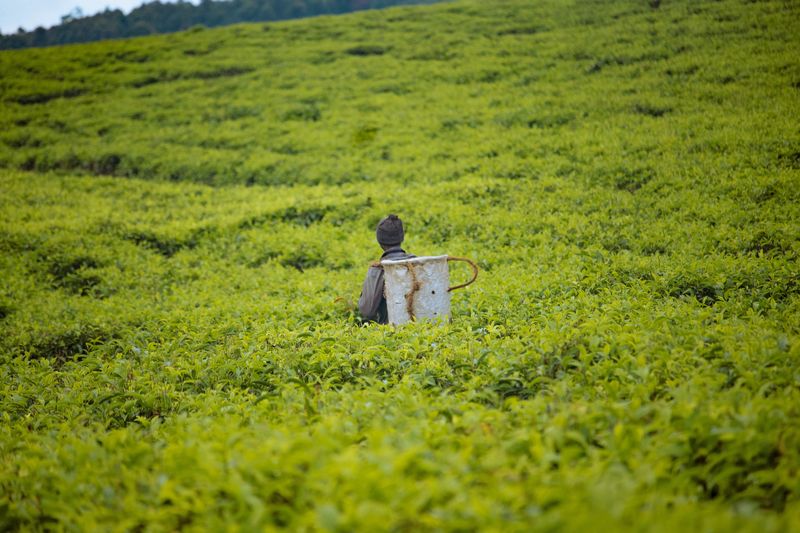
Have a final Pu'er breakfast of rice noodles (米干) — the local breakfast staple, served in a clear broth with minced meat, pickled vegetables, and a spoonful of chili oil. Then board the express bus or start the self-drive to Xishuangbanna. The 2-3 hour journey descends from 1,306 m to 558 m, and you will feel the temperature climb with every hour. By the time you arrive in Jinghong (景洪), the capital of Xishuangbanna, you are in tropical monsoon country — expect 22-30°C, high humidity, and the scent of frangipani and diesel.
Check into a hotel in the Gaozhuang (告庄) area — the modern tourist district on the east bank of the Mekong (Lancang River). Gaozhuang is lively, walkable, and packed with restaurants and shops. Spend the afternoon at Manting Park (曼听公园), a 1,300-year-old former Dai royal garden just 3 km from the city center. The park's lakes, temples, and tropical plantings create a serene introduction to Dai culture. Entrance is ¥40. Adjacent is Zongfo Temple (总佛寺), the highest-ranking Buddhist temple in Xishuangbanna — free to enter, with a golden stupa that glows in the late afternoon light.
Evening is for the Gaozhuang Starlight Night Market (星光夜市). This is one of China's largest night markets — hundreds of stalls line the Mekong riverside selling Dai-style lemongrass grilled fish (香茅草烤鱼), pineapple rice (菠萝饭 — hollowed pineapple stuffed with glutinous rice and tropical fruit), and mango sticky rice. The Dai barbecue (傣味包烧) is the highlight: meat or fish wrapped in banana leaves with lemongrass, galangal, and chili, then grilled over charcoal. Budget ¥50-80 per person for a generous meal. After eating, walk the riverside promenade — the Mekong at night, with lanterns reflecting on the water, is one of those travel moments that stays with you.
[CITATION CAPSULE] Manting Park served as the royal garden of Dai kings for over 1,300 years before opening to the public. Its name means "garden of the soul" in the Dai language. The adjacent Zongfo Temple is the highest-ranking Theravada Buddhist temple in Xishuangbanna, attracting pilgrims from across Southeast Asia (Ctrip travel guides, 2025).
Day 5: Xishuangbanna — Rainforest and Dai villages
Dedicate the morning to the Xishuangbanna Tropical Botanical Garden (中国科学院热带植物园), located in Mengla County about 1 hour from Jinghong. Operated by the Chinese Academy of Sciences, this is China's largest botanical garden at 1,125 hectares with over 13,000 plant species. The West Scenic Area (西区) alone needs 3-4 hours: themed gardens for palms, orchids, medicinal plants, and a "rainforest wonders" section with strangler figs, buttress roots, and a canopy walkway. Entrance is ¥80. Go early — the garden opens at 7:30 and the morning light through the canopy is spectacular.
In the afternoon, visit a Dai minority village (傣族园), located about 25 km from Jinghong. Five preserved Dai villages sit along the Lancang River, connected by walking paths. You will see traditional bamboo stilt houses, Buddhist temples with distinctive Xishuangbanna architecture (curved multi-tiered roofs with golden trim), and daily water-splashing activities in the central square. The water-splashing tradition — originally a New Year ritual — has become a tourist activity, but the underlying culture is genuine. Entrance is ¥45. Budget 2-3 hours.
Evening options: a Mekong river cruise (¥80-120) for sunset views, or head to Jinuo Mountain (基诺山) for a quieter experience — the Jinuo people are one of China's smallest ethnic groups (population ~20,000) and their mountain villages offer a different perspective from the more touristy Dai areas.
Where to stay in Xishuangbanna: Gaozhuang (告庄) is the most convenient base — hotels range from ¥200-500/night for mid-range options. For a quieter stay, the old town area (景洪老城) has smaller guesthouses at ¥150-300. Rainforest lodges near the Botanical Garden (¥400-800) suit travelers who want to wake up in the forest. During the October National Day holiday, book at least 2-3 weeks ahead — prices rise 1.5-2x and availability tightens.
Day 6 (optional): Xishuangbanna deep dive
If you have a sixth day, choose your adventure. Wild Elephant Valley (野象谷), 30 km north of Jinghong, offers a rainforest cableway that glides over Asian elephant habitat — sightings are not guaranteed but the forest itself is worth the trip (entrance ¥65). Alternatively, visit the border town of Mohan (磨憨), the China-Laos border crossing at the end of the China-Laos Railway. Or simply slow down: spend a morning at a local café in Gaozhuang, take a Dai cooking class, or visit a morning market where hill-tribe women sell wild herbs and forest honey.
Fly out of Gasa Airport in the evening. The airport is only 5 km from Gaozhuang — a 15-minute taxi ride.
What are the must-try foods along the entire route?
Yunnan's cuisine is one of China's most diverse, shaped by its ethnic variety and the range of climates along this route. Each city has its own food identity.
Kunming: Crossed-bridge rice noodles (过桥米线) are the signature dish — a bowl of scalding chicken broth served with raw sliced meat, quail eggs, chrysanthemum leaves, and bean sprouts that cook when you add them. Try it at Qiao Xiang Ji (桥香园) or any busy local shop on Wenhua Lane. Steam pot chicken (汽锅鸡) uses a special steam-condensing clay pot from Jianshui. Flower cakes (鲜花饼) make the best edible souvenir — buy them fresh from Jiahua (嘉华) stores.
Pu'er: Tea chicken (茶鸡) is the local specialty — chicken braised with raw Pu'er tea leaves until the meat takes on an earthy, slightly tannic depth. Wild mushroom hotpot (野生菌火锅) is best in autumn; October brings porcini, matsutake, and "chicken fat mushroom." Bamboo rice (竹筒饭) — glutinous rice with cured pork stuffed into fresh bamboo and roasted — is sold at every market. Sour fish (酸鱼) is a Dai/Hani specialty: river fish fermented with rice flour, chili, and herbs, then pan-fried. For breakfast, rice noodles (米干) with minced meat and pickled vegetables is the local morning ritual.
Xishuangbanna: Dai-style lemongrass grilled fish (香茅草烤鱼) is the iconic dish — whole fish stuffed with lemongrass, galangal, and chili, wrapped in banana leaves and grilled. Pineapple rice (菠萝饭) is both a meal and a presentation: a hollowed pineapple filled with glutinous rice, pineapple cubes, raisins, and cashews, then steamed. The Dai barbecue set (傣味包烧) at the Gaozhuang night market is a feast of grilled meats, fish, and vegetables with sticky rice. Tropical fruits — mango, mangosteen, rambutan, durian — are cheap and abundant. Try Beerlao (Lao beer) at a riverside bar for the full Mekong experience.
[CITATION CAPSULE] Dai-style lemongrass grilled fish (香茅草烤鱼) is Xishuangbanna's signature dish, with preparation methods documented across Dai communities for centuries. At the Gaozhuang night market, a whole grilled fish costs ¥25-40 — one of the best value meals on the entire route. The dish is distinct from Thai or Vietnamese grilled fish in its use of local herbs like lemongrass (香茅) and galangal (南姜) native to the Mekong river valley (Ctrip food guides, 2025).
On my first visit to the Gaozhuang night market, I followed the smoke — the stalls with the thickest charcoal smoke turned out to have the best grilled fish. A vendor wrapped a whole tilapia in banana leaves with a fistful of lemongrass and chili, and charged ¥25. It was the best single dish of the trip. The market is overwhelming at first — walk the full loop once before buying anything, then go back to the stalls that drew the biggest local crowds.
Which tea plantations and nature spots deserve the most time?
Not all attractions are equal. Here is how to prioritize your time based on distance, experience quality, and uniqueness.
[CITATION CAPSULE] The Xishuangbanna Tropical Botanical Garden, operated by the Chinese Academy of Sciences, spans 1,125 hectares with over 13,000 plant species — making it China's largest botanical garden. The West Scenic Area alone needs 3-4 hours, and the canopy walkway through primary rainforest is one of the few places in China where you can experience multi-layered tropical forest structure at height (Chinese Academy of Sciences, 2025).
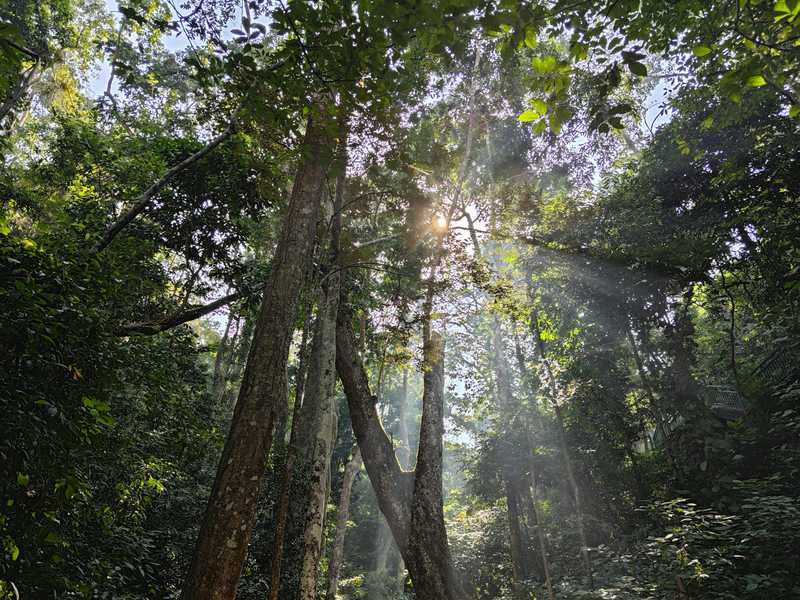
Jingmai Mountain (景迈山) — the must-spend destination. This is the only tea-themed UNESCO World Heritage site in the world. The ancient tea forests are not manicured plantations — they are wild-looking groves where tea trees grow under a natural forest canopy, some over 1,000 years old. The Blang and Dai villages (Wengji, Nuogang) are living cultural landscapes, not museum exhibits. Plan a full day minimum; an overnight stay lets you see the sunrise sea of clouds and experience village life after day-trippers leave. Distance: 2.5 hours from Pu'er city. Entrance: ¥50.
Xishuangbanna Tropical Botanical Garden (中科院热带植物园) — the nature highlight. China's largest botanical garden, operated by the Chinese Academy of Sciences, with 13,000+ species across 1,125 hectares. The West Scenic Area alone needs a full morning. The canopy walkway and "rainforest wonders" section (strangler figs, cauliflory, buttress roots) are genuinely impressive. Distance: 1 hour from Jinghong. Entrance: ¥80.
Sun River Forest Park (太阳河国家森林公园) — the accessible wildlife encounter. Golden monkeys, red pandas, rhinos, and forest boardwalks just minutes from Pu'er city. The animal encounters are closer than at most Chinese wildlife parks. Good for families and travelers who want nature without a long drive. Distance: 3-5 km from Pu'er center. Entrance: ¥100-180.
Wild Elephant Valley (野象谷) — the rainforest experience. A cableway glides over Asian elephant habitat through primary rainforest. Elephant sightings are seasonal and not guaranteed, but the forest walk itself is worthwhile. Distance: 30 km north of Jinghong. Entrance: ¥65.
Manting Park + Zongfo Temple (曼听公园 + 总佛寺) — the cultural introduction. A 1,300-year-old royal garden paired with Xishuangbanna's most important Buddhist temple. Together they give you the aesthetic and spiritual context for everything else you will see in Dai areas. Distance: 3 km from Jinghong center. Entrance: ¥40 (Manting), free (Zongfo).
Tea Horse Road (茶马古道) — the historical thread. Not a single site but a network of ancient trade routes. The Ning'er section (1 hour north of Pu'er) has preserved stone paths and horse-stable ruins. Best for travelers who want to understand how Pu'er tea reached Tibet and beyond.
Why is early October the ideal time, and how should you prepare?
Early October sits in a sweet spot for this route. The rainy season (May-October) is winding down — rainfall decreases through the month, and the landscape is at its greenest. Temperatures range from 15°C in Kunming to 30°C in Xishuangbanna (Wikipedia climate data, 2025). Temperatures are comfortable across all three cities, and the autumn tea harvest (秋茶) is underway at Jingmai Mountain, meaning you can taste fresh tea processed days after picking.
Weather by city in early October:
| City | Avg High | Avg Low | Rainfall | What to Expect |
|---|---|---|---|---|
| Kunming (1,891 m) | 21°C (70°F) | 13°C (55°F) | Moderate, decreasing | Mild days, cool evenings — light jacket |
| Pu'er (1,306 m) | 27°C (81°F) | 17°C (63°F) | Decreasing | Warm days, pleasant evenings — short sleeves + light layer |
| Xishuangbanna (558 m) | 29°C (84°F) | 20°C (68°F) | 80-120mm, short showers | Tropical — hot, humid, afternoon thunderstorms possible |
Packing essentials: Layers are key given the 1,300 m altitude drop. A light fleece or jacket for Kunming evenings, quick-dry clothing for Xishuangbanna, a compact rain jacket or umbrella for afternoon showers, sunscreen (UV is strong at altitude and in the tropics), comfortable walking shoes for tea forest trails, and insect repellent for Xishuangbanna.
National Day holiday (October 1-7): If your trip overlaps with Golden Week, expect 1.5-2x hotel prices and book everything 3-4 weeks ahead. Trains sell out fast. The upside: night markets are livelier, and festivals sometimes add cultural performances. If you prefer quiet, shift to October 8-15 — prices drop and crowds thin while the weather remains excellent.
Altitude notes: Kunming's 1,891 m can cause mild altitude sensitivity in some travelers (headache, fatigue on day one), but most people acclimate within hours. Pu'er (1,306 m) and Xishuangbanna (558 m) are low enough that altitude is not a concern. Stay hydrated and avoid heavy exercise on your first day in Kunming if you are sensitive.
Frequently Asked Questions
How much does a 5 to 6 day Kunming-Pu'er-Xishuangbanna trip cost?
Budget breakdown per person for a mid-range trip: Transport (rail + bus + local) ¥500-800; Hotels (5 nights, mid-range) ¥1,500-2,500; Food ¥500-800; Attraction tickets ¥300-400; Flights (return from Xishuangbanna) ¥400-800. Total: approximately ¥3,200-5,300 per person ($450-750 USD), excluding the flight into Kunming. Budget travelers using hostels and street food can do it for ¥2,000-2,800; luxury travelers staying at eco-resorts should budget ¥6,000+.
Is self-drive safe on this route in October?
The G8511 expressway connecting Kunming, Pu'er, and Xishuangbanna is well-maintained and well-signposted. October rain can make surfaces slippery, especially on mountain sections between Kunming and Yuxi, and afternoon thunderstorms in Xishuangbanna reduce visibility. The main risks are fatigue on the 6-hour Kunming-Pu'er stretch and wildlife on rural roads near Sun River Park. If you are comfortable driving in rain and mountain conditions, self-drive gives you the most flexibility for stops at tea farms and viewpoints. Otherwise, rail + bus is reliable and stress-free.
Can you do this trip without a guide?
Yes. All three cities have tourist infrastructure in English and Chinese, and the major attractions have signage in both languages. Jingmai Mountain is the one place where a local guide (available at the entrance for ¥100-200) adds real value — they can take you to tea forests not on the main trails and explain the Blang/Dai tea traditions. For the rest of the route, a good guidebook and the tips in this article are sufficient.
What about altitude sickness?
Kunming at 1,891 m causes mild symptoms (slight headache, breathlessness on stairs) in a small percentage of visitors, but serious altitude sickness is rare below 2,500 m. Pu'er (1,306 m) and Xishuangbanna (558 m) are low enough that altitude is not a factor. If you are concerned, spend your first day in Kunming taking it easy, stay hydrated, and avoid alcohol. Most people feel normal by the second day.
Should you base in one city or move each night?
Move with the route. The whole point of this journey is the descent through climate zones — staying in one city and day-tripping would mean hours of driving each day and missing the sunrise at Jingmai Mountain. The recommended plan uses four bases: 1 night Kunming (or skip and take an evening train), 2 nights Pu'er area (one on Jingmai Mountain, one in Pu'er city), and 2 nights Xishuangbanna. Pack light — you will be changing hotels every night or two.
Conclusion
The Kunming-Pu'er-Xishuangbanna route is one of China's most rewarding short-haul journeys. In 5 to 6 days, you descend through three climate zones, walk through thousand-year-old tea forests that earned UNESCO recognition, taste some of the country's most distinctive regional cuisines, and end in a tropical rainforest that feels closer to northern Thailand than to the China most visitors imagine. The China-Laos Railway made the first leg effortless; the remaining road connections are straightforward and scenic.
Start with the tea. Jingmai Mountain is the anchor of this trip — everything else radiates from the understanding that this landscape has been shaped by a thousand years of human care for tea trees. Once you have walked those forests and tasted tea picked from branches older than most countries, the rest of the route — the night markets, the rainforest, the Mekong at sunset — feels like a natural extension of the same story.
Book your rail tickets on 12306, reserve hotels 2-3 weeks ahead for the October holiday, pack a rain jacket and your appetite, and go.
- The China-Laos Railway makes Kunming-to-Pu'er a 3-hour rail journey — the backbone of the entire route
- Jingmai Mountain's UNESCO World Heritage status (2023) makes it the cultural and spiritual centerpiece of the trip
- Early October offers the best balance of weather, crowds, and the autumn tea harvest
- No rail link between Pu'er and Xishuangbanna — budget 2-3 hours for the road transfer
- The altitude drop from 1,891 m to 558 m means packing for three climates in one trip
Sources
- Yunnan Provincial Government, 2024 tourism statistics (704 million visitors, ¥1.14 trillion revenue), https://www.yn.gov.cn/
- UNESCO World Heritage Centre, "Cultural Landscape of Old Tea Forests of the Jingmai Mountain in Pu'er" (inscribed 2023), https://whc.unesco.org/en/list/1665/
- Wikipedia, "China-Laos Railway" — Kunming to Pu'er segment data, https://en.wikipedia.org/wiki/China%E2%80%93Laos_Railway
- Wikipedia, "Kunming" — elevation and climate data, https://en.wikipedia.org/wiki/Kunming
- Wikipedia, "Pu'er City" — elevation and climate data, https://en.wikipedia.org/wiki/Pu%27er_City
- Wikipedia, "Jinghong" — elevation and climate data, https://en.wikipedia.org/wiki/Jinghong
- Ctrip (携程), flight schedules and hotel data for Xishuangbanna Gasa Airport, https://flights.ctrip.com/
- Ctrip Travel Guides (携程攻略), Manting Park and attraction information, https://you.ctrip.com/
- Mafengwo (马蜂窝), Jingmai Mountain ticket and travel information, https://www.mafengwo.cn/
- Qunar (去哪儿), transport and accommodation pricing, https://www.qunar.com/