Odyssey vs. Journey to the West: Nolan's Epic Compared (2026)
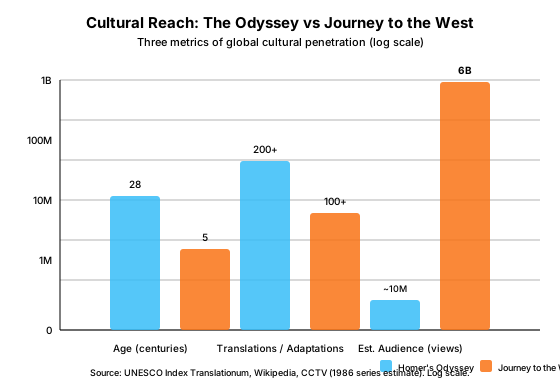
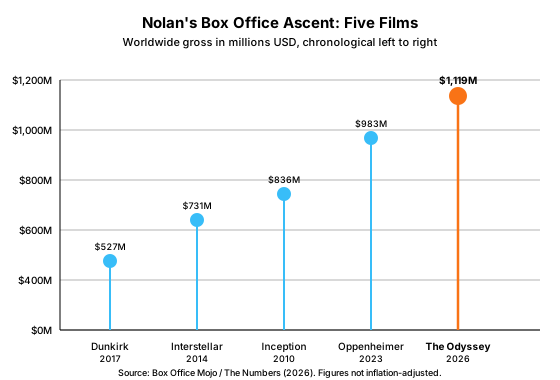
Two civilizations, two journeys, one universal itch to come home. When Christopher Nolan's The Odyssey crossed $1.119 billion worldwide in under a month (Box Office Mojo, 2026), it did more than break records. It dragged a 2,800-year-old Greek poem back into the global conversation — and invited an obvious question. How does Homer's Odyssey stack up against the other great journey epic, China's Journey to the West?
The answer says as much about us as it does about the stories.
Key Takeaways
- Nolan's The Odyssey grossed 497M).
- Homer's Odyssey (~8th century BCE) is the most translated ancient work after the Bible; Journey to the West (16th century) has 50–100+ screen adaptations.
- The 1986 CCTV Journey to the West series has an estimated 6 billion views — likely the most-watched TV series ever.
- Nolan shot the first feature film entirely on IMAX 70mm, using over 2 million feet of film.
How Do the Two Source Epics Compare?
The Odyssey is old. Roughly 2,800 years old. Composed around the 8th century BCE, it runs 12,110 lines across 24 books. According to the UNESCO Index Translationum, it is the most translated work of the ancient world after the Bible, available in over 70 languages with more than 200 English translations alone (UNESCO, 2026). Emily Wilson's 2017 version was the first English translation by a woman.
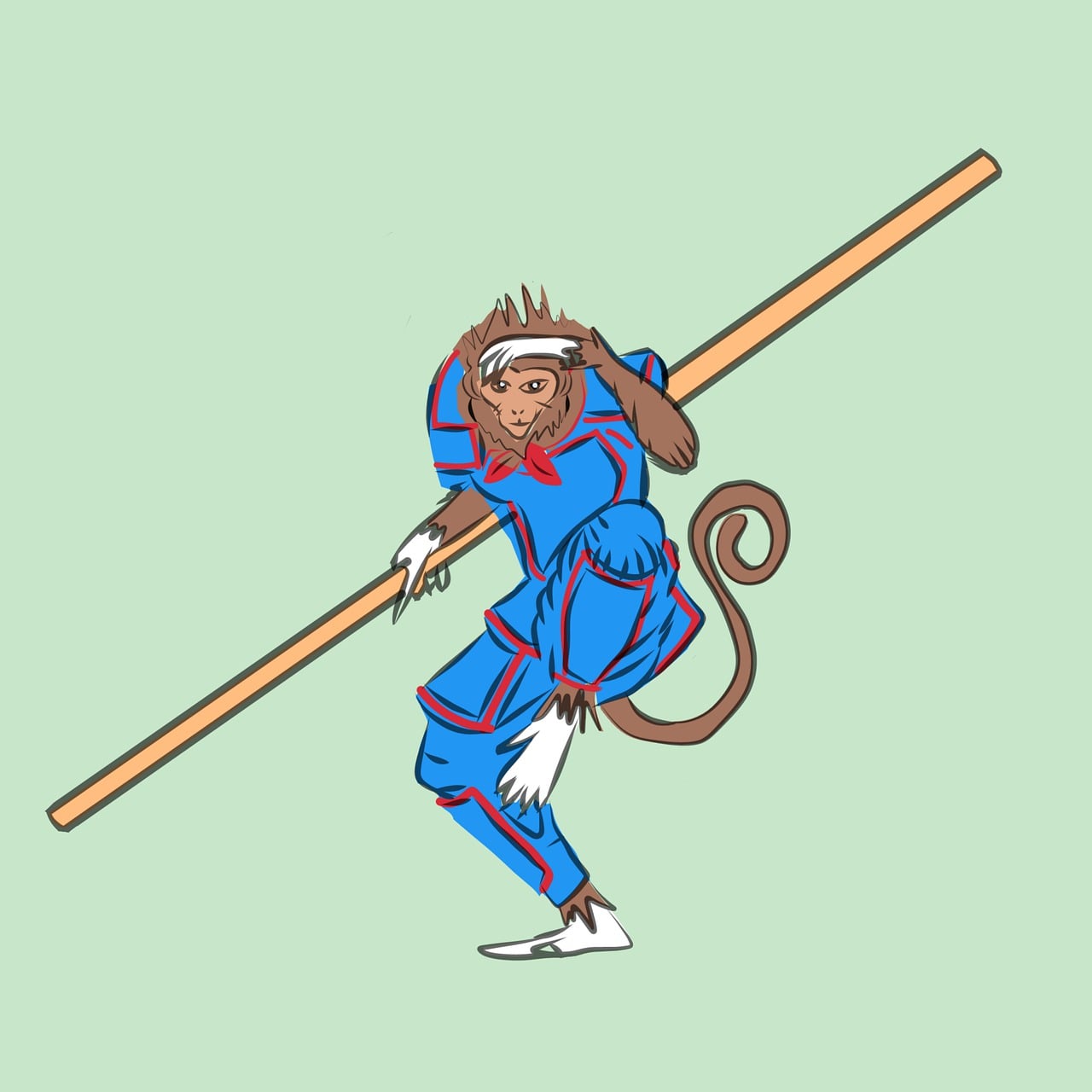
Journey to the West is the younger sibling. Attributed to Wu Cheng'en and published in the 16th century during the Ming Dynasty, it spans 100 chapters and roughly 1,250 pages. It is one of the Four Great Classical Novels of Chinese literature, and its hero Sun Wukong — the Monkey King — is among the most portrayed characters in global media.
The two works encode opposite instincts. Odysseus fights to restore the home and kingdom he left behind. Sun Wukong begins by rebelling against heaven itself. One is a story of nostos — the longing to return. The other is a story of transformation — the long road to enlightenment. Both, though, are structured as episodic trials, and both reward the same virtue: endurance.
How Does Nolan's Odyssey Stack Up Against Past Epic Films?
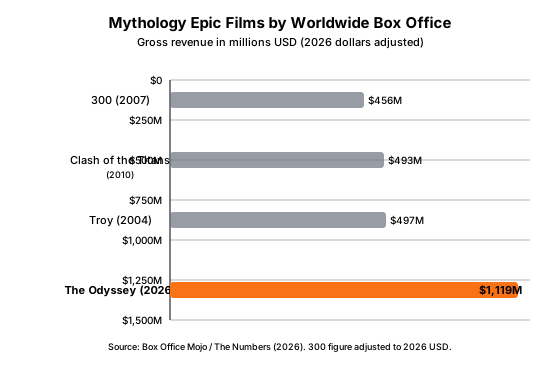
In 2026, Nolan's The Odyssey didn't just beat the mythology-epic genre — it lapped it. Troy (2004), directed by Wolfgang Petersen and starring Brad Pitt, held the benchmark at **175–185 million budget (Box Office Mojo, 2004). 300 (2007) earned 493 million. Nolan nearly doubled all three.
The gap is striking. Troy opened 22 years ago in a different theatrical landscape, yet no mythology adaptation since has come within $200 million of its total. Nolan closed that gap and then some, proving that a three-hour, R-rated, dialogue-heavy epic about a man sailing home could outgross sword-and-sandal spectacles built on CGI battles.
According to Box Office Mojo's 2026 tracking, The Odyssey earned 658 million international, with a $123.5 million opening weekend (Box Office Mojo, 2026). The international share — 59% of total gross — mirrors Troy's 73% overseas split, confirming that ancient stories travel well when the filmmaking is bold enough.
What Makes Nolan's Odyssey Different From Every Prior Mythology Film?
The production itself is the story. Nolan shot The Odyssey as the first feature film in history captured entirely on IMAX 70mm film cameras (Wikipedia, 2026). The production burned through over 2 million feet of IMAX 70mm film across a 91-day shoot that wrapped nine days early. Locations spanned Morocco, Western Sahara, Greece, Italy, Iceland, Scotland, Malta, and the Universal Studios Lot in Los Angeles.
The cast reads like a festival poster. Matt Damon plays Odysseus. Tom Holland is Telemachus. Anne Hathaway plays Penelope. Zendaya takes Athena. Lupita Nyong'o appears in a dual role as Helen of Troy and Clytemnestra. Robert Pattinson, Charlize Theron, and John Leguizamo round out a roster that spans three generations of blockbuster talent. Ludwig Göransson scored the film; Hoyte van Hoytema shot it; Jennifer Lame edited it. Nolan's core team, intact since Interstellar.
At 173 minutes — two hours and fifty-three minutes — it is long. It is also R-rated, making it the second-highest-grossing R-rated film ever at the time of writing. The 125 million marketing push, makes it one of Universal's largest bets. It paid off within three weeks.
Does Journey to the West's Adaptation Legacy Outscale the Odyssey's?
Here the comparison gets uncomfortable — for the West. Journey to the West has been adapted so many times that no definitive count exists. Estimates place the number of feature-length film adaptations at 50 to 100 or more, spanning China, Japan, Korea, and Hollywood (Wikipedia, 2026). The franchise's combined box office runs 1 billion-plus.
But the real number is television. The 1986 CCTV adaptation starring Liu Xiao Ling Tong (Six Little Tong) has been viewed an estimated 6 billion times over the decades since its debut — a figure that likely makes it the most-watched television series in human history (CCTV, 2026). It still airs every year during Chinese New Year holidays.
Stephen Chow's Journey to the West: Conquering the Demons (2013) alone grossed $215 million. The Monkey King is, in screen terms, closer to Batman than to Odysseus — a character rebooted every generation, each version finding a new audience. Homer's hero, by contrast, has waited millennia for a single definitive blockbuster.
Is Nolan's Odyssey Worth Your Time and Ticket Money?
Yes — with a caveat. If you want a faithful, line-by-line adaptation of Homer, you will be frustrated. Nolan compresses, rearranges, and invents. The film's first act covers the Trojan War in fragmented flashbacks that assume you already know the story. Viewers unfamiliar with the myth may feel unmoored for the opening thirty minutes.
But if you want to feel what the Odyssey has always been about — the ache of distance, the suspicion that home may not exist anymore, the slow erosion of identity across years of wandering — Nolan delivers. Damon's Odysseus is less a hero than a man running out of reasons to keep going. The IMAX 70mm format makes the sea feel infinite and the islands feel small. It is the most physically overwhelming film I have seen since Dunkirk.
The caveat: this is a three-hour R-rated ancient-epic drama. It is not casual viewing. It demands the kind of attention most films no longer ask for. That it earned $1.119 billion anyway is either a miracle or a sign that audiences are hungrier for difficulty than the industry believes.
Frequently Asked Questions
How did The Odyssey become the second-highest-grossing R-rated film?
In 2026, The Odyssey reached $1.119 billion worldwide, surpassing every prior R-rated release except one (Box Office Mojo, 2026). Its combination of Nolan's brand, IMAX exclusivity, and a stacked cast drove repeat viewings and premium-format ticket sales that most R-rated films never capture.
Why did Nolan shoot the entire film on IMAX 70mm?
Nolan has argued for years that 70mm film captures a depth and resolution digital formats cannot match. The Odyssey used over 2 million feet of IMAX 70mm film across 91 shooting days, making it the first feature shot entirely in the format (Wikipedia, 2026). The decision limited filming locations and required custom-built cameras but produced a visual density audiences responded to.
When does The Odyssey open in China?
The film released in Hong Kong and Macau on July 16, 2026, with a mainland China release scheduled for August 14, 2026 (Wikipedia, 2026). Given Journey to the West's cultural resonance in China, the marketing campaign there explicitly drew parallels between the two epic journey traditions.
Which epic has more adaptations, the Odyssey or Journey to the West?
Journey to the West has more screen adaptations — an estimated 50 to 100-plus film and TV versions. The Odyssey dominates in translation, with over 70 languages and 200-plus English versions (UNESCO, 2026). The two works lead in different categories of cultural penetration.
Conclusion
Nolan's The Odyssey is not just a great film. It is a proof of concept: ancient stories, told with enough craft and conviction, can still command a global audience measured in billions. Homer's poem waited 2,800 years for this version. Wu Cheng'en's Monkey King has been reborn every generation. Together they remind us that the journey — not the destination — is the oldest story we have, and the one we keep needing to hear.
If you have not seen it yet, see it on the biggest screen you can find. That is what Odysseus would have wanted.
Sources
- Box Office Mojo, The Odyssey (2026) box office tracking, retrieved 2026-08-11, https://www.boxofficemojo.com
- The Numbers, mythology film box office comparison data, retrieved 2026-08-11, https://www.the-numbers.com
- Wikipedia, "The Odyssey (2026 film)", production details and cast, retrieved 2026-08-11, https://en.wikipedia.org/wiki/The_Odyssey_%282026_film%29
- UNESCO Index Translationum, Homer translation statistics, retrieved 2026-08-11, https://www.unesco.org
- Wikipedia, "Journey to the West" adaptation list, retrieved 2026-08-11, https://en.wikipedia.org/wiki/Journey_to_the_West
- Wikipedia, "Highest-grossing R-rated films", 2026 ranking, retrieved 2026-08-11, https://en.wikipedia.org/wiki/List_of_highest-grossing_R-rated_films
- Wikipedia, "Oppenheimer (film)", box office records, retrieved 2026-08-11, https://en.wikipedia.org/wiki/Oppenheimer_%28film%29
- CCTV, Journey to the West 1986 series viewership estimates, retrieved 2026-08-11, https://www.cctv.com